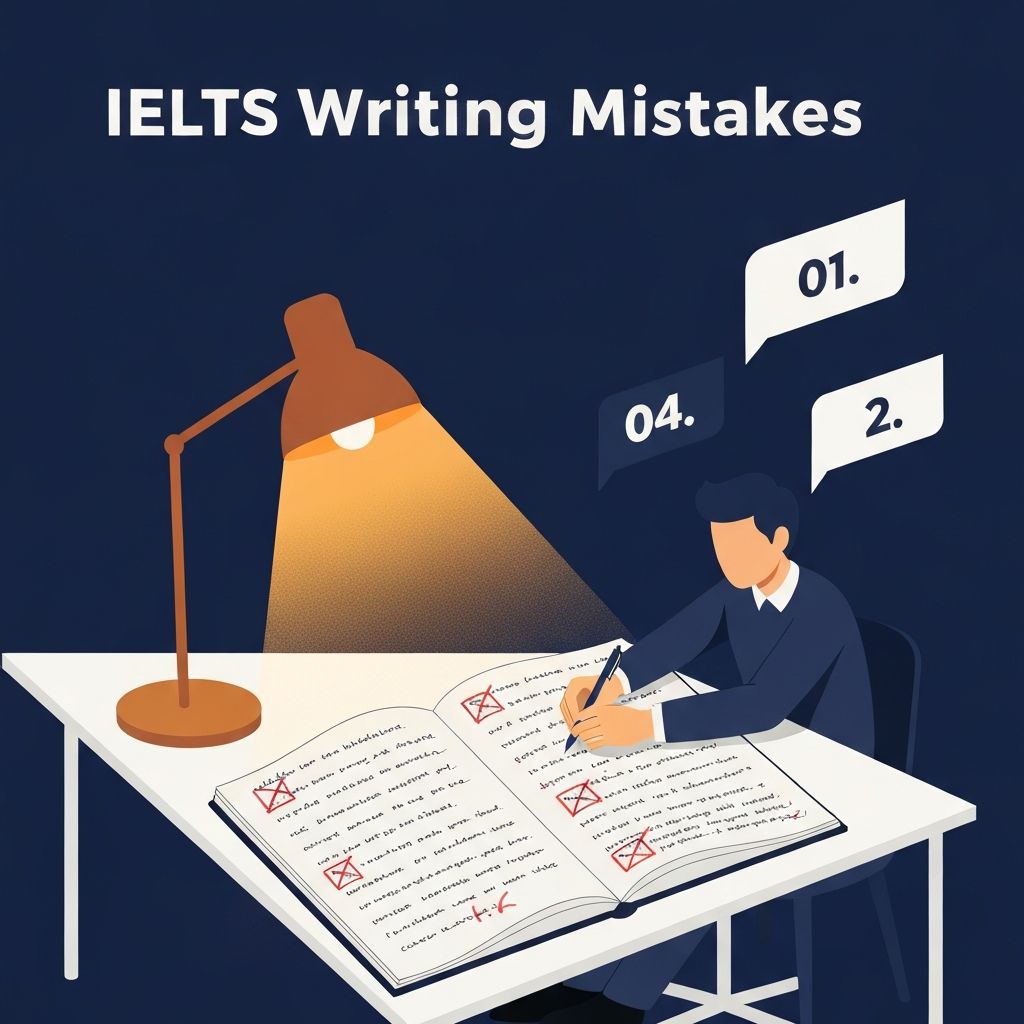
You studied hard. You wrote for hours. You still got Band 6. Sound familiar? The frustrating truth is that the three most common IELTS Writing mistakes have nothing to do with vocabulary or grammar — they are structural, and completely fixable.
Mistake 1: Paraphrasing the Question Word-for-Word
Examiners read your introduction first. If it is a copy-paste of the question with a few synonyms swapped in, you immediately signal a lack of analytical thinking. The fix? Demonstrate you understand the issue, then frame it in your own words.
Mistake 2: Task Response — Answering Only Half the Question
IELTS Task 2 questions almost always contain two parts: a statement and a directive (Discuss both views / To what extent do you agree / What are the causes and effects). Students routinely address one part deeply and neglect the other. This single error caps your Task Response score at Band 5 — no matter how brilliant your language is.
Strategy: underline every instruction word before you write a single sentence. "Discuss both views AND give your own opinion" means your essay must do three things.
Mistake 3: Coherence Collapse in Body Paragraphs
A well-structured paragraph follows the PEEL pattern: Point → Explanation → Evidence → Link. Most students write P then immediately jump to E (evidence), skipping the explanation that connects them. The examiner cannot follow the logic and marks Coherence & Cohesion down.
The 5-Day Fix Plan
- Day 1–2: Practise writing introductions only — paraphrase 10 questions without looking at sample answers.
- Day 3: Underline every question directive. Write a one-sentence plan addressing each part.
- Day 4–5: Write two full Task 2 responses using PEEL strictly. Submit for AI feedback.
"Band improvement in Writing does not come from writing more — it comes from writing smarter."
What Comes Next
These fixes will lift most students 0.5–1 band within two to four weeks of consistent practice. The key is deliberate repetition, not volume. Try our AI Writing Feedback tool to get examiner-style comments on your next essay — free, instant, and specific to your errors.